Stretch marks

On this page
Stretch marks are a common kind of scarring that shows up when skin stretches quickly. They often fade, they rarely disappear, and this page is honest about what to expect.
At a glance
- Stretch marks are harmless and very common
- They often fade to a paler colour, but may not disappear
- There is no good evidence that creams and oils prevent them
- X-Wave works on the look of the skin, with no promised result
- Stretch marks are a normal part of how skin responds to growth and change
What stretch marks are
Stretch marks are a kind of scarring in the skin. They show up when skin is pulled quickly and the fibres that give it stretch and spring, elastin and collagen, break in places.
They usually start red, purple or dark, and fade over time to a paler, silvery colour. They do not hurt and you cannot catch them, though plenty of people feel self-conscious about them.
Why they happen
The usual triggers:
Pregnancy
Gaining or losing weight
Growth spurts in the teenage years
Fast muscle growth, for example from bodybuilding
Some medicines, such as steroids
Genes, which have a big say in who gets them and how they look
What generally helps
Less than the shelves of products suggest.
Gradual weight change where you can, since fast stretching is the main trigger
Moisturiser, which keeps skin comfortable. Creams and oils do not prevent or remove stretch marks
Sunscreen, so marks do not stand out against tanned skin. In Singapore that matters all year
Balanced eating and regular exercise for your skin and body overall
Realistic expectations
Stretch marks often fade by themselves, but they may never fully disappear. No single option clearly beats the rest, and how much changes depends on the type, age and colour of the marks and on your skin.
So if you want them gone, we will be honest: we cannot do that. What we can offer is a machine that works on the look of the skin. Results vary from person to person.
New marks and older marks
Stretch marks change over time, and that changes what to expect.
Newer marks are usually red, purple or dark. Marks tend to respond better when you start early.
Older marks have usually faded to a paler, silvery colour. They are often less noticeable already, and may change less with anything you try.
Sunscreen matters for both, because tanned skin makes pale marks stand out more.
Where our machines fit
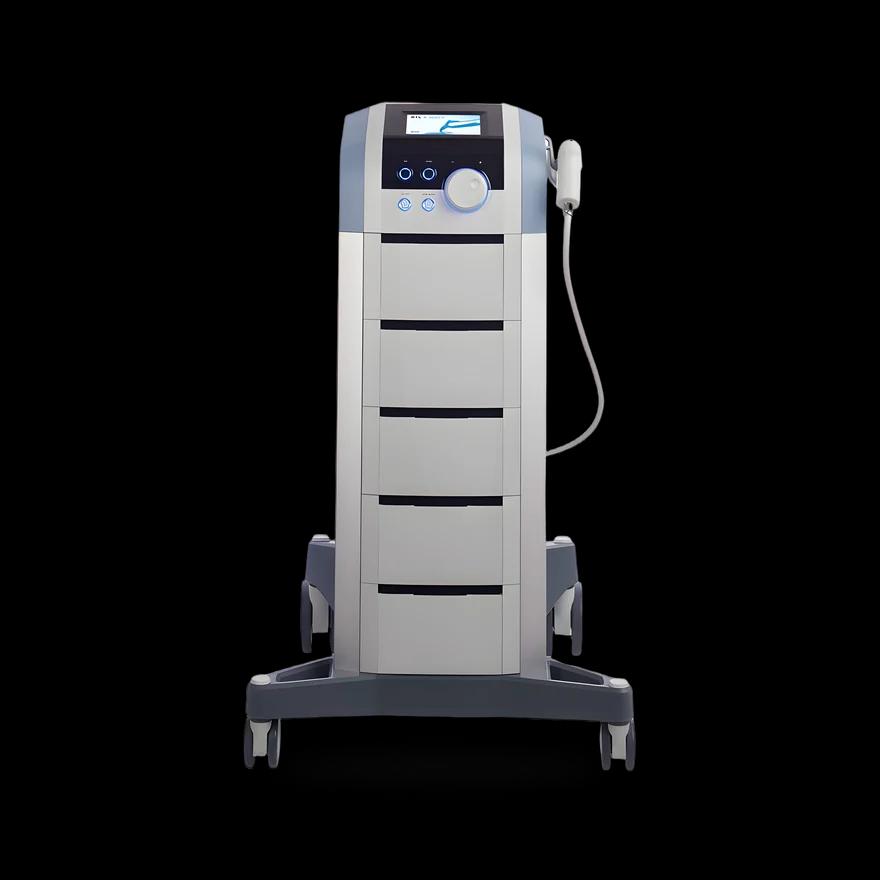
X-Wave sends acoustic waves that make gentle vibrations in the tissue under your skin. It is designed to firm and smooth the skin and soften the look of cellulite and stretch marks. We use it on the thighs, buttocks and abdomen, and on other areas with stretch marks.
There are no needles. You feel a tingling, and a little warmth for a short while afterwards. At your assessment your therapist plans how many sessions you need and how long each takes.
X-Wave is also one of our machines for cellulite. If your marks came with a pregnancy, our page on postpartum core conditioning covers recovery after birth, and our postpartum plan shows how we pace it.
Everyday habits
Aim for gradual weight change where you can.
Moisturise for comfort, not to erase marks.
Keep strong sun off the area.
Wear soft clothes that do not rub.
Go easy on yourself. Stretch marks are extremely common.
Want to talk about whether X-Wave is worth trying? Book a free assessment call.
Machines we use for this
Questions people ask
What causes stretch marks?
Skin stretching quickly: in pregnancy, with weight gain or loss, during growth spurts or with fast muscle growth. Your genes play a part too.
Will stretch marks go away?
They usually fade from red, purple or dark to a paler, silvery colour. They may not disappear completely.
Can creams prevent them?
There is no good evidence that lotions, oils or creams prevent stretch marks. Moisturising still feels nice and keeps skin comfortable.
Does X-Wave remove stretch marks?
No. X-Wave works on the look of the skin and may help soften how stretch marks appear. We cannot promise they will fade, and results vary from person to person.
Are older marks harder to change?
Usually, yes. Newer marks tend to respond better. Any result depends on your skin and the age and colour of the marks.
Sources and further reading
We are a beauty salon, not a medical clinic. This page is general information, not medical advice, and results vary from person to person.
Want to talk it through?
Start with a free assessment call. No hard sell, and we go through pricing there.